

Wool is one of the few fabrics that can be ruined in a single wash. The good news is that how to wash wool at home comes down to four simple rules: check the care label, hand wash in cool water with detergent, press the water out instead of wringing, and always dry it flat.
Structured pieces like blazers and coats are a different story. Here’s how to wash wool safely, and how to tell which pieces are too risky to DIY.
Why Wool Is So Easy to Ruin in the Wash
The Science Behind Shrinking and Felting
Wool is an animal fibre, and every strand is covered in tiny overlapping scales, a bit like roof tiles. Cotton doesn’t have these, which is why your cotton tees survive a hot wash and your wool sweater doesn’t.
When wool meets heat, friction, and sudden changes in water temperature, those scales open up, catch on each other, and lock together. Every spin pulls the fibre tighter. The result is called felting: the fabric shrinks, thickens, and stiffens, and it doesn’t go back.
Three triggers cause the damage:
- Heat: warm or hot water opens up the scale.
- Friction: rubbing, scrubbing, and machine tumbling push the fibres together.
- Temperature shock: moving wool from warm wash water into a cold rinse makes the fibres contract fast.
Avoid all three, and wool is far more forgiving than its reputation suggests.
One Wash Cycle Can Undo an Expensive Sweater
You pull your favourite merino sweater out of the washing machine, and it’s suddenly the size of something your kid would wear. Tighter, thicker, and no amount of stretching will save it.
It happens more often than you’d think. A regular wash cycle hits all three felting triggers at once: warm water, long agitation, and a fast spin. A sweater that should have lasted years can be finished in under an hour.
Most of this damage is completely avoidable with a few simple habits.
How to Hand Wash Wool Safely at Home
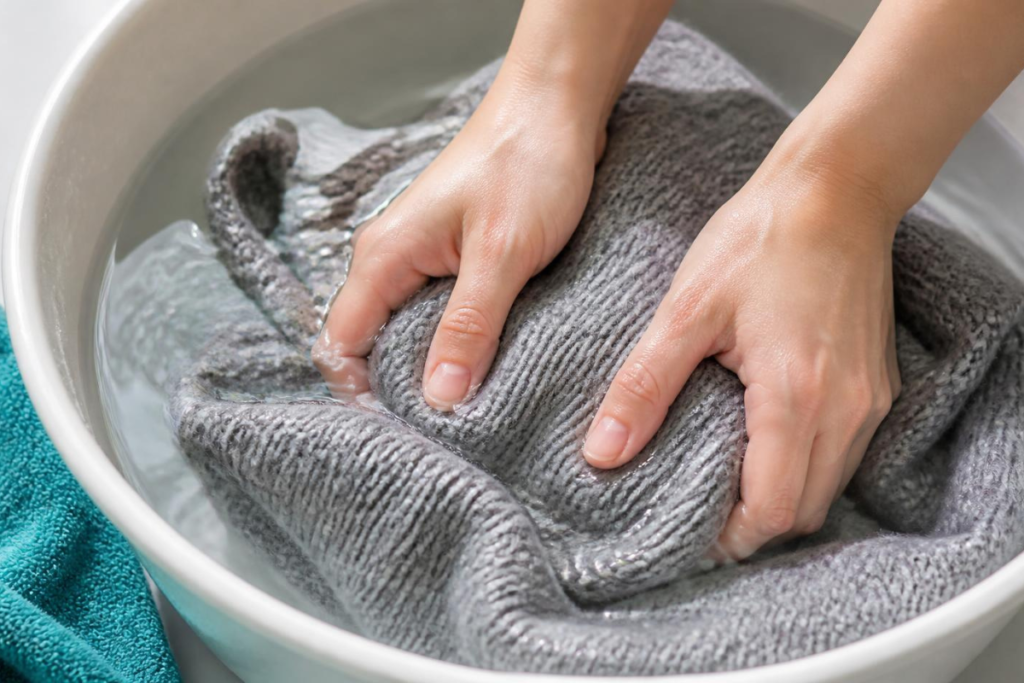
Hand washing is the gentlest option for wool sweaters, cardigans, scarves, and other knitwear. Set aside about 30 minutes, plus drying time.
Step 1: Check the Care Label First
Before anything touches water, read the label. Wool care labels usually fall into one of three groups.
- Hand wash: safe to wash at home using the steps below.
- Machine wash on a wool cycle: some treated wool can handle a dedicated wool or delicates cycle with cold water and a low spin. If you’re unsure, hand wash anyway.
- Dry clean only: keep it away from water completely. Washing it at home risks shrinking, lining damage, and a garment that never sits right again.
Not sure what the little icons mean? Our guide to Dry Cleaning Symbols Explained breaks down every symbol on the bag.
Step 2: Use Cool Water and Wool- Safe Detergent
Fill a clean basin with cool or lukewarm water, around 30°C or below. It should feel neutral to the touch, never warm.
Add a small amount of detergent made for wool. Regular detergents can be too harsh, and many contain enzymes designed to break down protein stains. Wool is a protein fibre, so those same enzymes can weaken it over time. Look for a gentle, pH neutral formula labelled for wool or delicates.
Submerge the garment, press it gently under the water a few times, then let it soak for about 10 minutes. No rubbing, no scrubbing.
Rinse in fresh water at the same temperature. Keeping the wash and rinse water consistent avoids the temperature shock that triggers felting.
Step 3: Never Wring or Twist
Wet wool is heavy, and its fibres are at their weakest. Wringing or twisting stretches it out of shape and can leave it permanently distorted.
Instead, remove the water like this:
- Lift the garment out with both hands, supporting its full weight.
- Press it gently against the side of the basin to squeeze out excess water.
- Lay it flat on a clean, dry towel, roll the towel up with the garment inside, and press down to absorb more water.
If it’s still dripping, repeat with a second dry towel.
Step 4: Dry Flat, Never Hang
Hanging wet wool lets the weight of the water drag it downward, stretching the shoulders and lengthening the hem for good.
Unroll the garment onto a fresh towel or a flat mesh drying rack. Gently reshape it to its original size, smoothing out the sleeves, collar, and hem. Leave it to dry indoors in a well-ventilated spot, away from direct sunlight and heat.
In Singapore’s humidity, wool can take a day or more to dry fully. A nearby fan speeds things up, and flipping the piece halfway through helps both sides dry evenly. Make sure it’s completely dry before you put it away, so it doesn’t pick up a musty smell.
And never put wool in a tumble dryer. The heat and movement are exactly what causes felting.
Signs Your Wool Needs a Professional Touch
Hand washing works well for simple knits. Some wool pieces, though, carry more risk than a basin can handle.
Structured or Blended Wool Garments
Wool blazers, coats, and suit jackets are built in layers: the wool outer fabric, an inner lining, and often interfacing or padding that gives the garment its shape.
Each layer reacts to water differently. The wool can shrink while the lining doesn’t, leaving the puckered seams, a bubbling front, and a jacket that no longer fits the way it should. Wool blends add another variable, since each fibre in the mix may shrink, stretch, or dry at a different rate.
If it’s tailored, lined, or structured, it belongs with a professional.
Stains, Odours, or Delicate Embellishments
It’s also time to hand it over when:
- The stain won’t lift: Oil, makeup, food, and older marks often need targeted treatment, and scrubbing at home can damage the fabric around the stain.
- The smell won’t go: Odours from sweat, storage or Singapore’s humidity can linger in wool fibres after a gentle hand wash.
- The details are delicate: Beading, sequins, special buttons or trims can loosen, snag or bleed when soaked.
Worth knowing: older or set-in stains may not lift completely, even with professional care. The sooner a stain is assessed, the better the chances. Curious what actually happens to your garment once it’s handed over? Read How Does Dry Cleaning Work?
Let The Care Handle the Wool That's Too Risky to DIY
Professional Wool Cleaning Across Singapore
For the wool you’d rather not risk, The Care offers professional dry cleaning, with every garment handled according to its fabric and construction. Coats, blazers, and branded knits get the careful treatment they need, and you skip the guesswork entirely.
Dry cleaning is priced per piece. Here’s a quick guide for common wool garments.
| Wool Garment | Dry Clean Price |
|---|---|
| Sweater/Cardigan | $7 |
| Sweater/Cardigan (Branded/Cashmere) | $12 |
| Long Sweater/Cardigan | $11 |
| Long Sweater/Cardigan (Branded) | $16 |
| Jacket/Blazers | $11 |
| Winter Wear: Regular Coat | $20 |
| Winter Wear: Trench Coat | $25 |
| Winter Wear: Long Coat | $30 |
Prices are correct at the time of publishing. For the latest rates, check our price list.
Doorstep Pickup & Delivery
No time to drop off? The Care picks up from your doorstep and delivers back anywhere in Singapore, free for orders of $60 and above. Your wool comes back cleaned and ready to wear within 5 to 7 working days.
Book your pickup at order.thecare.com.sg.