

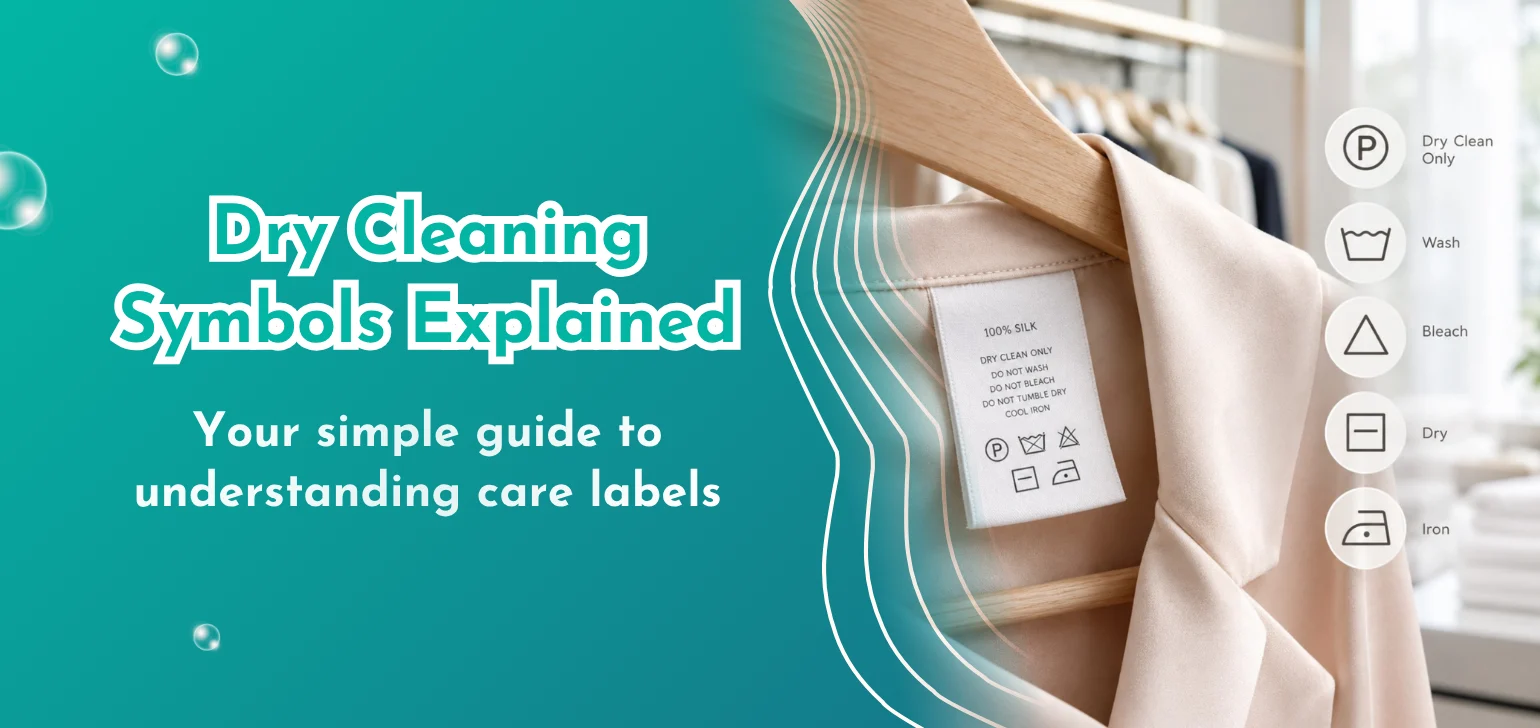
Have you ever brought a beautiful dress or expensive blazer, only to notice a collection of mysterious symbols on the care label?
Those symbols aren’t just there for decoration. They tell you how to wash, dry, iron, and professionally clean a garment. Ignoring them can lead to shrinking, colour fading, fabric damage, or a garment that no longer fits the way it should.
Understanding dry cleaning symbols can help you avoid those mistakes and know when a garment needs professional care.
Here’s a simple guide to the most common label symbols and what they mean.
Why Care Label Symbols Matter More Than You Think
One Wrong Wash Can Ruin an Expensive Garment
Imagine putting a delicate silk dress into the washing machine because it looks like an ordinary piece of clothing.
The result? The fabric may shrink, lose its shape, bleed colour, or develop permanent damage.
The same can happen with a structured blazer, wool garment, or dress decorated with beads and sequins.
Care labels exist to prevent this. They provide specific instructions from the garment manufacturer about which cleaning and dry cleaning methods are suitable for the fabric and construction.
Before cleaning a new garment, take a few seconds to check the label. That small step could save you from an expensive mistake.
Understanding the Main Care Symbols
#1. The Circle: Dry Cleaning Instructions
The circle symbol relates to professional cleaning.
A plain circle generally indicates that the garment is suitable for professional dry cleaning. You may also see letters inside the circle, which provide information about the type of professional cleaning process or solvent that can be used.
Common symbols include:
- P: Professional dry cleaning using certain permitted solvents
- F: Professional dry cleaning using petroleum-based solvents
- W: Professional wet cleaning
You may also see a circle crossed out. This means do not dry clean the garment.
It’s important not to assume that every garment with a circle can be cleaned using any dry-cleaning process. The additional markings provide important information about permitted treatment.
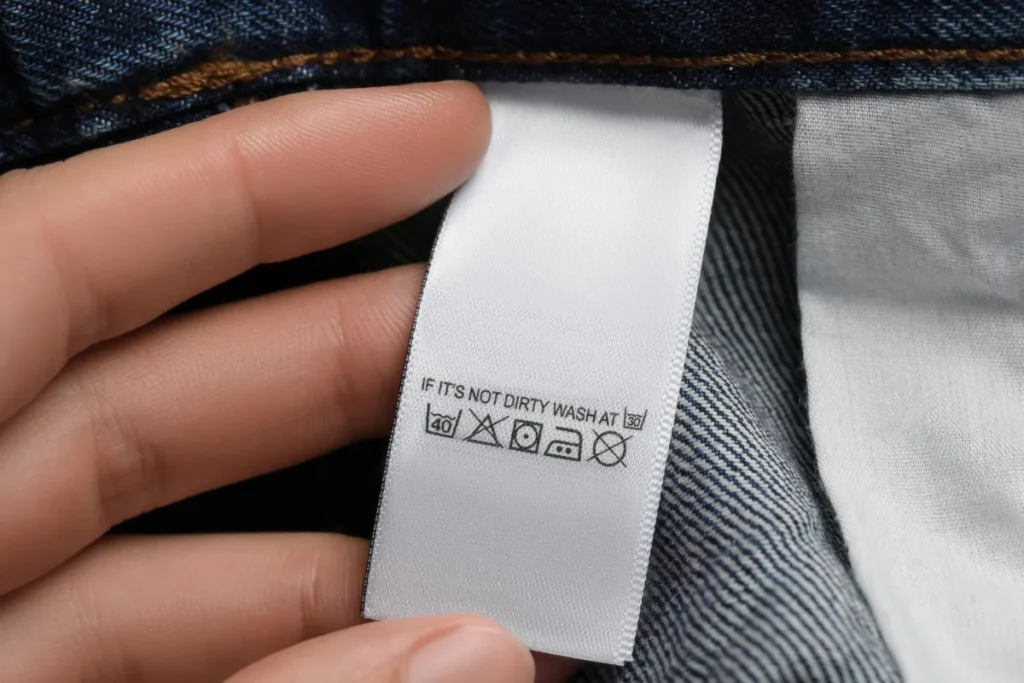
#2. The Washtub: Washing Instructions
The washtub symbol tells you whether a garment can be washed with water.
A number inside the tub indicates the maximum washing temperature, such as 30°C or 40°C.
You may also see:
- A hand inside the tub: Hand wash only
- One or more lines underneath: Use a gentler washing cycle
- A crossed-out tub: Do not wash
If a garment says “hand wash only”, putting it through a standard machine cycle can expose the fabric to more agitation than recommended.
#3. The Triangle: Bleach Instructions
The triangle symbol tells you whether bleach can be used.
A plain triangle generally means bleaching is allowed.
A triangle with diagonal lines indicates that only certain non-chlorine or oxygen-based bleaching products may be suitable. A crossed-out triangle means: do not bleach.
This is especially important for coloured or delicate garments because unsuitable bleach can cause permanent colour changes or damage the fabric.
#4. The Square: Drying Instructions
The square symbol provides information about drying.
A square containing a circle indicates that the garment can be tumble dried. Dots inside the circle indicate the recommended heat level.
Other square symbols can indicate:
- Line drying
- Drip drying
- Flat drying
- Drying in the shade
A crossed-out square with a circle means do not tumble dry. Always pay attention to these instructions because excessive heat can cause certain fabrics to shrink, distort, or become damaged.
#5. The Iron: Ironing Temperature
The iron symbol tells you whether and how a garment can be ironed.
The dots indicate the maximum recommended temperature:
- One dot: Low heat
- Two dots: Medium heat
- Three dots: High heat
- Crossed-out iron: Do not iron
When you’re unsure, it’s safer to use a lower temperature rather than applying excessive heat directly to delicate fabric.
When “Dry Clean Only” Really Means It
Some garments require professional care because their fabric, construction or decoration makes regular washing unsuitable.
Fabrics and Garments That Often Need Professional Care
These can include:
- Silk: Can be sensitive to water, heat and agitation
- Wool: May shrink or lose its shape if washed incorrectly
- Suede: Requires specialist treatment and should not be treated like ordinary washable fabric
- Beaded or sequined garments: Washing can damage delicate embellishments
- Structured blazers and suits: Water and heat can affect their shape and construction
- Formal and evening dresses: Delicate fabrics and decorative details may require specialist care
However, fabric type alone doesn’t determine the correct cleaning method. Always follow the care label first.
What Happens If You Ignore the Symbol?
Using the wrong cleaning method can cause several problems.
A garment may:
- Shrink
- Lose its original shape
- Fade or bleed colour
- Develop water marks
- Become distorted
- Damage embroidery or embellishments
- Suffer permanent fabric damage
That’s why the care label should be your first reference before washing or cleaning a garment.
Not Sure What the Symbols Mean? Let The Care Help
Care labels can still be confusing, particularly when a garment has several symbols or contains delicate materials.
When you’re unsure, don’t guess.
You can contact The Care through WhatsApp and share details or a photo of the garment and its care label. The team can help you understand the appropriate cleaning option before you proceed.
Professional Dry Cleaning Across Singapore
The Care provides professional dry-cleaning services for a range of garments, including dresses, blazers, suits and other items that require specialist care.
Current listed prices include:
- Blazer: From $12
- Dress: From $15
- Suit: From $20
Prices can vary depending on the garment and cleaning requirements, so check The Care’s latest price list before booking.
The Care also offers pickup and delivery services across Singapore, making it easier to send delicate or bulky garments for professional cleaning without making a trip to the outlet.
Final Thoughts: Check the Symbol Before You Clean
Care labels may look complicated at first, but once you know the basic symbols, they’re much easier to understand.
Remember the five main categories:
- Circle = Professional cleaning
- Washtub = Washing
- Triangle = Bleaching
- Square = Drying
- Iron = Ironing
If you’re unsure about a symbol or the correct treatment for a delicate garment, it’s better to ask a professional than risk damaging it.
Before your next wash, take a moment to check the label, understand the symbols and choose the cleaning method your garment actually needs.
Need professional dry cleaning in Singapore? Check The Care’s latest price list or contact the team for advice on your garment.
Frequently Asked Questions
What does the circle symbol mean on a care label?
The circle symbol relates to professional dry cleaning. Letters inside it (P, F, or W) indicate the type of solvent or process permitted, while a crossed-out circle means the garment should not be dry cleaned.
What does the washtub symbol mean?
The washtub symbol shows whether a garment can be washed with water and at what temperature. A hand inside means hand wash only, and a crossed-out tub means do not wash.
What happens if I ignore care label symbols?
Ignoring care symbols can cause a garment to shrink, lose its shape, fade or bleed colour, develop water marks, or suffer permanent fabric damage.
Which fabrics almost always need dry cleaning?
Silk, wool, suede, beaded or sequined garments, structured blazers and suits, and formal or evening dresses often require professional care due to their fabric or construction.
Does The Care offer dry cleaning pickup and delivery?
Yes. The Care provides professional dry cleaning with pickup and delivery services across Singapore, so you don’t need to make a trip to the outlet.