

Spilled tea on your favourite shirt? Got makeup on your collar or grease on your trousers? Knowing how to remove tea stains from clothes and other common stains quickly can make a big difference.
The golden rule is simple: treat a stain as soon as possible. Fresh stains are generally easier to remove, while dried or set-in stains can become much harder to treat.
Before trying any stain-removal method, always check the garment’s care label. Different fabrics can require very different cleaning methods.
Why Acting Fast on Stains Makes All the Difference
Treat the Stain Before It Sets
The longer a stain remains on fabric, the more time it has to penetrate the fibres and become difficult to remove.
As soon as you notice a spill, gently blot away excess liquid with a clean cloth or paper towel. Avoid rubbing, which can push the stain deeper into the fabric or spread it across a larger area.
For washable fabrics, follow the care label and treat the stain before putting the garment through a normal wash.
What Not to Do When a Stain Happens
A few common mistakes can make stains harder to remove:
- Don’t rub aggressively: This can spread the stain and damage the fibres.
- Don’t use hot water automatically: Heat can make some protein-based stains, such as blood, more difficult to remove.
- Don’t iron a stained garment: Heat can set some stains further into the fabric.
- Don’t use a cleaning product without checking the fabric: Delicate materials may react badly to certain products.
When you’re unsure, start with the gentlest approach recommended for the fabric.
How to Remove Everyday Stains From Clothes
Different stains require different approaches. Here’s how to deal with some of the most common ones.
How to Remove Tea and Coffee Stains From Clothes
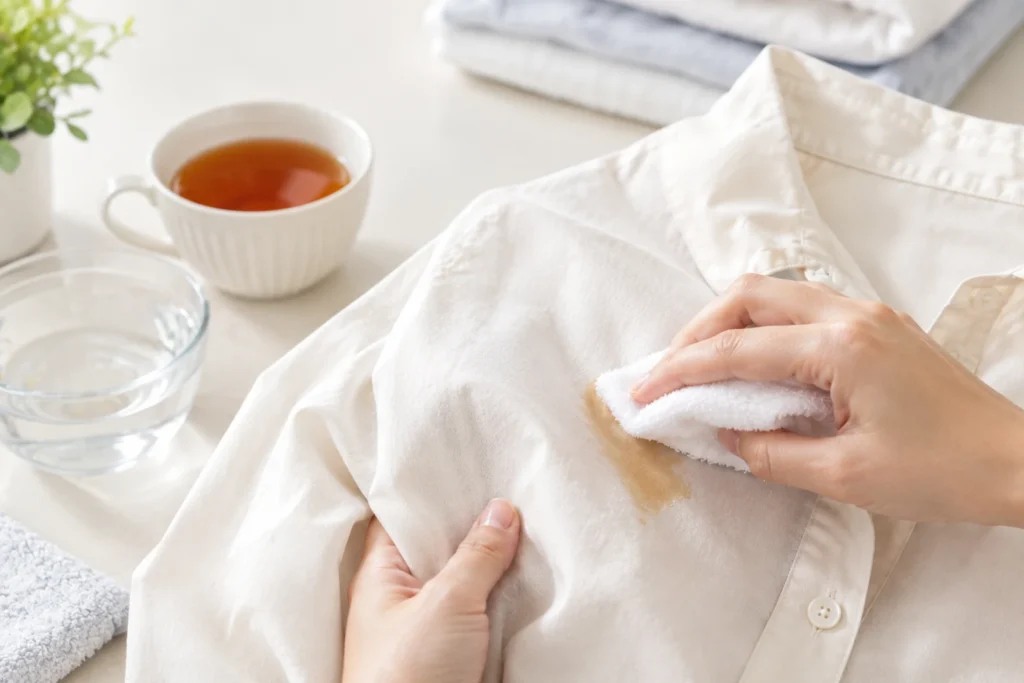
Tea and coffee are among the most common clothing stains, and treating them quickly can help prevent them from setting.
For washable fabrics:
- Blot the excess liquid with a clean cloth.
- Rinse the stained area with cool water from the back of the fabric to help push the stain out rather than further into the fibres.
- Apply a small amount of suitable laundry detergent to the affected area.
- Leave it according to the product instructions, then wash the garment according to its care label.
- Check that the stain has disappeared before drying or ironing.
Avoid putting the garment in a hot dryer while the stain is still visible, as heat may make the remaining stain more difficult to remove.
How to Remove Wine and Fruit Juice Stains
For wine and fruit juice, blot rather than rub as soon as possible.
Use cool water to rinse washable fabrics from the reverse side, then follow the garment’s care instructions for pre-treatment and washing.
Because coloured drinks contain strong pigments, avoid applying excessive pressure when blotting. If the stain remains after washing, don’t iron or tumble dry the garment until it has been properly treated.
How to Remove Grease and Oil Stains
Grease and oil need a different approach from water-based spills because oil does not simply rinse away with water.
First, gently blot away excess oil. For washable garments, apply a suitable laundry detergent or stain-treatment product according to its instructions, then wash according to the care label.
Avoid immediately using high heat. Check the stain after washing and repeat the appropriate treatment if necessary before drying.
How to Remove Makeup and Sweat Stains
Makeup stains such as foundation and lipstick can contain oils, pigments, and other ingredients that make them difficult to remove.
Gently remove any excess product without rubbing it further into the fabric. Then follow the care label and use a suitable stain treatment for the garment.
For yellow or dark marks around the underarms, the combination of sweat, body oils, and deodorant residue can cause discolouration over time. Treat these areas according to the fabric’s care instructions rather than relying on repeated washing alone.
When a Stain Is Too Risky to DIY
Not every stain should be treated at home.
Delicate or Dry-Clean-Only Fabrics
Silk, wool, embellished garments, and other delicate fabrics can be easily damaged by incorrect stain treatments. If the care label says “Dry Clean Only”, don’t experiment with household stain removers before checking whether they are suitable.
You can also read our guide to Dry Cleaning Symbols Explained to understand what your garment’s care label is telling you.
Old or Set-In Stains
A stain that has already dried, particularly one that has gone through a dryer or been ironed, can be significantly more difficult to remove. Repeated DIY treatments may also affect the colour or texture of the fabric.
For an old, stubborn or unidentified stain, professional cleaning allows the garment to be assessed and treated according to its fabric and condition.
Special-Occasion Garments
Be particularly careful with wedding dresses, evening gowns, suits, expensive blazers and other garments that would be costly or difficult to replace.
Trying an unfamiliar stain-removal method on an important garment can create a bigger problem than the original stain.
Let The Care Handle the Stains You Can’t Risk
When a stain won’t come out, or you’re worried about damaging the fabric, professional garment care can take the guesswork out of stain treatment.
The Care Laundry provides professional dry cleaning across Singapore, handling workwear, formalwear, outerwear, and delicate fabrics. Its cleaning team assesses garments and uses fabric-appropriate cleaning methods.
Current dry-cleaning prices include:
- Shirt / Blouse / T-shirt: starting from $7
- Trouser / Skirt: starting from $7
- Jacket / Blazer: starting from S$11
- Suit (2-piece set): starting from S$12
- Standard Dress: starting from S$11
- Evening Dress: starting from S$25
Prices can vary by garment and cleaning requirements, so check The Care’s latest price list before ordering.
Doorstep Pickup & Delivery Across Singapore
You can also skip the trip to the outlet. The Care offers pickup and delivery services across Singapore, making it easier to send garments for professional cleaning when you’re short on time.
For orders reaching $60, delivery is free.
Frequently Asked Questions
How do you remove tea stains from clothes?
Blot the tea immediately, rinse the stain with cool water from the back of the fabric, then apply a suitable laundry detergent or stain treatment before washing according to the care label. Avoid drying or ironing the garment until the stain is gone.
Can tea stains be removed after they dry?
Yes, a dried tea stain may still be treatable, but it can be more difficult to remove than a fresh stain. Avoid applying heat and consider professional cleaning if the stain remains after appropriate treatment.
What is the best way to remove stains from clothes?
The best method depends on the type of stain and fabric. Treat fresh stains quickly, avoid rubbing or unnecessary heat, and always follow the garment’s care label.
Does hot water remove stains better?
Not always. Hot water can make some stains, particularly certain protein-based stains, harder to remove. For an unknown stain, check the care instructions before choosing the water temperature.
Should you iron clothes with stains?
No. Avoid ironing a garment while a stain is still visible. Heat can set some stains and make them more difficult to remove.
When should I take stained clothes to a professional cleaner?
Consider professional cleaning for old or stubborn stains, delicate fabrics, dry-clean-only garments, and valuable or special-occasion clothing. Professional cleaners can assess the garment before choosing an appropriate cleaning method.
When it comes to stains, act quickly, treat gently, and check the care label first.
For everyday washable clothes, prompt treatment can often help with fresh tea, coffee, juice, grease and makeup stains. But for delicate fabrics, set-in stains, or garments you cannot afford to damage, professional cleaning is often the safer choice.
When you’re not sure what to do with a stubborn stain, let The Care take care of it.